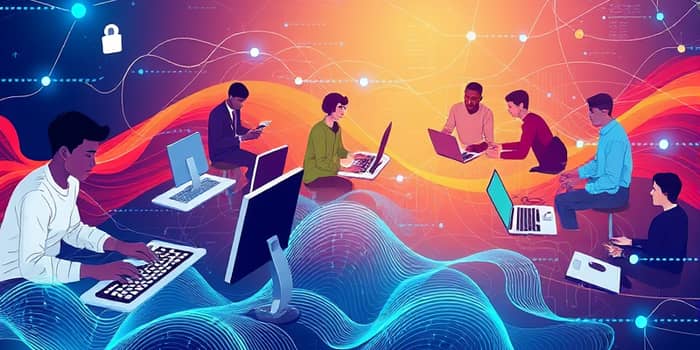
In a world where digital threats evolve daily, organizations must protect users and data in real time. Behavioral biometrics offers a new frontier in cybersecurity, capturing subtle, individual actions to verify identity continuously. By analyzing a user's unique typing, swiping, and device interaction patterns, this technology enables almost instantaneous fraud detection without disrupting the experience.
Behavioral biometrics differs from traditional methods by focusing on dynamic, cognitive and physical behaviors rather than static traits. As users type, tap, and navigate, advanced systems collect thousands of signals invisibly. Algorithms then compare ongoing behavior to an established baseline, spotting even minute deviations that may signal account takeover or automated attacks.
This approach creates a foundation for adaptive risk intelligence, adapting security measures to real-time threat levels and user context. Customers benefit from strengthened protection while enjoying a friction-free journey through banking, e-commerce, and beyond.
At its core, behavioral biometrics involves several key processes:
Upon first interaction, the system engages in passive, continuous identity verification, capturing metrics such as keystroke rhythm, swipe pressure, and mouse-click patterns. These signals form a detailed profile representing an individual's normal behavior.
During each session, machine learning models execute machine learning powered anomaly detection, comparing live behavior against the stored profile. When a pattern strays beyond acceptable thresholds, the system adjusts risk scores and may trigger additional checks for high-risk actions like large fund transfers.
Behavioral biometric technologies span various modalities, each offering unique insights into user identity and intent:
This comparison highlights how behavioral solutions embed seamlessly into digital workflows, offering robust protection without demanding extra steps from users.
Organizations deploying behavioral biometrics unlock seamless, frictionless user experiences while defending against sophisticated threats. Continuous authentication ensures that every transaction—from logging in to completing payments—maintains the highest security standards without interrupting genuine users.
Beyond finance, any digital service requiring user verification can integrate these solutions to heighten trust. By layering continuous biometric checks with existing authentication methods, companies can create a multi-dimensional defense strategy.
Global interest in behavioral biometrics is surging, with the market projected to exceed $13 billion by 2033. Leading institutions report remarkable results: one bank halted over £1.6 million in fraudulent transfers instantly, while another organization blocked more than 90% of illicit payments within its network.
Regulators in regions like Malaysia are advocating for behavioral authentication to replace one-time passwords in high-speed payment systems, acknowledging its ability to deliver continuous monitoring without user interruption. Businesses adopting this technology often see a rapid decline in both fraud-related losses and user support tickets.
Implementing behavioral biometrics demands high-quality data capture and careful model training. Organizations must address privacy concerns by relying on mathematical feature representations rather than storing raw interaction data, ensuring user trust remains intact.
Looking forward, integration with emerging modalities—such as gait analysis, voice patterns, and wearable sensor data—promises to reinforce security layers even further. Ethical frameworks and standards will guide responsible deployment, emphasizing ethical use and minimal data intrusion while maintaining powerful fraud defenses.
As digital interactions grow more complex, behavioral biometrics stands at the forefront of identity assurance. By leveraging the rich tapestry of human behavior patterns, businesses can protect users more effectively, creating a safer and more intuitive online experience for all.
References