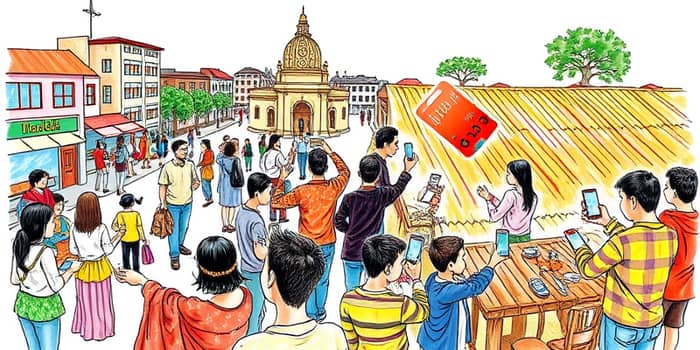
As economies around the world accelerate their shift to digital, the idea of a truly cashless society moves from theory to reality. From major urban centers to remote communities, the rise of mobile wallets, contactless cards, and QR code payments is reshaping how we exchange value. In this article, we explore the data driving this transformation, the benefits and challenges it presents, and practical pathways to inclusive financial futures.
While some regions lead in adoption and innovation, others face barriers tied to income, infrastructure, and trust. Understanding these dynamics is essential for policymakers, businesses, and consumers alike. Together, we can forge a hybrid, inclusive model that harnesses the power of digital payments while ensuring no one is left behind.
Global adoption of digital transactions has surged in recent years. Today, 85% of global point-of-sale transactions occur without cash, and forecasts predict that by 2027, over 94% of U.S. payments and 89% of global POS transactions will be cashless. Mobile payment apps are on track to reach 3.2 billion users by 2025, while digital wallet users could top 5.2 billion by 2026.
These figures underscore a global momentum that shows no signs of slowing. Contactless payments alone now account for three-quarters of in-person transactions, reflecting both consumer preference and merchant readiness.
Certain nations have emerged as pioneers in cashless infrastructure. In Latin America, Brazil’s PIX system has reached 85% instant payment adoption, while India’s UPI gateways facilitate over three-quarters of POS volumes through digital wallets. Australia plans to retire paper checks by 2025, with 98% of payments shifting online.
Conversely, rural areas and developing regions still depend heavily on cash. In Africa, Kenya’s M-Pesa leads mobile money usage but many neighboring countries lag due to limited connectivity and regulatory hurdles. In the U.S., urban centers achieve 78% cashless rates, yet rural communities remain below 50%. Bridging these divides requires targeted investment in digital literacy and infrastructure.
Income level is a powerful predictor of cashless adoption. Higher earners enjoy broader access to credit, banking, and smartphones, while lower-income groups often face barriers to digital services. This gap risks reinforcing existing inequalities if left unaddressed.
Notably, middle-income earners around $40K–$70K hover near a 50/50 balance between cash and digital, indicating a tipping point where digital convenience becomes dominant. Designing affordable, accessible payment solutions for vulnerable populations is key to closing this gap.
Transitioning toward cashless economies brings significant advantages for businesses, consumers, and governments. Retailers can realize a 50% reduction in cash-handling costs and enjoy fast and convenient transactions, reducing queues and labor overhead. Governments benefit from greater tax transparency enabling governments to allocate resources more effectively and curb fraud.
However, the shift also presents risks. Cyberattacks and system outages can disrupt economies, and overreliance on digital platforms may exclude those without reliable connectivity or banking relationships. Ensuring robust security protocols and emergency cash access points can mitigate these challenges.
With every transaction digitized comes the potential for data collection and surveillance. Privacy concerns escalate as payment histories can reveal sensitive personal details. Striking a balance between regulatory oversight and individual rights requires transparent policies and consumer education.
Meanwhile, the digital divide remains a stark reality. In many regions, limited broadband, sporadic electricity, and low digital literacy impede adoption. Public-private partnerships can expand infrastructure, while community programs can teach essential skills, ensuring that digital payment systems serve everyone.
Despite the surge in digital payments, cash retains a strong foothold. In the U.S., over 85% of adults used cash in the past month, and many report no plans to abandon it. Reasons include perceived privacy, ease of budgeting, and trust in a physical store of value.
For seniors and unbanked individuals, cash is often the only familiar method. Policymakers must consider these preferences when designing future payment landscapes. Allowing cash alongside digital options fosters choice and prevents unintended exclusion.
Rather than pursuing an all-or-nothing approach, the most resilient societies will adopt hybrid payment models. Combining digital rails with reliable cash infrastructure can deliver the best of both worlds: convenience for tech-savvy users and accessibility for those who need cash.
Practical steps to achieve this balance include:
Through thoughtful policy, industry innovation, and community engagement, it is possible to build a payment ecosystem that is both forward-looking and inclusive.
The road to a cashless future is paved with opportunity and complexity. By understanding regional dynamics, income disparities, and consumer sentiment, stakeholders can craft strategies that maximize benefits while safeguarding equity. A hybrid model that values both digital innovation and the enduring role of cash will ensure no one is left behind as we journey toward a more efficient, transparent, and inclusive financial world.
References