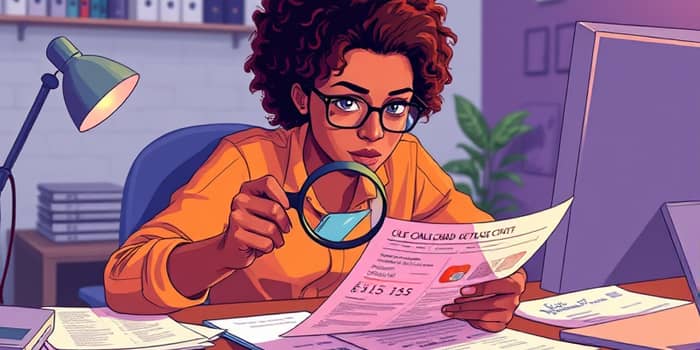
Your credit card statement can be more than just a monthly bill—it’s a window into your financial health. Yet, with one in five people experiencing at least one error on their report, these statements often hide costly mistakes.
Recent studies show that 20% of consumers have an error on their credit reports, affecting over 10 million users in the U.S. alone. Even a small discrepancy in balance can lead to inflated charges or higher interest rates.
Errors range from misreported payments to unauthorized charges. When left unchallenged, they can cause long-term damage to credit, resulting in loan denials and increased borrowing costs.
Moreover, credit card fraud is on the rise. As digital payments grow, so does card-not-present fraud. Manual entry mistakes and identity theft have made it vital for every cardholder to become their own watchdog.
Errors on credit card statements often overlap with mistakes on credit reports. They typically fall into four main categories:
Each of these can drive unexpected costs and complicate your financial outlook. Recognizing them early is the first step toward resolution.
The Fair Credit Billing Act (FCBA) and Regulation Z (§ 1026.13) offer strong consumer protections against billing errors. Under these rules, disputed amounts cannot accrue interest during investigation.
Key aspects include:
Understanding these safeguards empowers you to challenge errors confidently, ensuring you never pay more than you owe.
Developing a systematic review process makes detecting mistakes simpler and faster. Follow these steps to protect your credit:
Preventing errors is often easier than fixing them. Adopt these habits to minimize risk:
Vigilance and good systems reduce the chance of missing an error and save you from future headaches.
Errors on credit card statements are not just numbers on a page—they can alter your financial trajectory. By establishing a proactive review routine and knowing your rights under FCBA and Regulation Z, you reclaim control over your credit.
Remember, each statement presents an opportunity: to catch mistakes, dispute unfair charges, and strengthen your financial confidence. Commit to these practices today, and you’ll build a foundation of accuracy, security, and peace of mind.
References