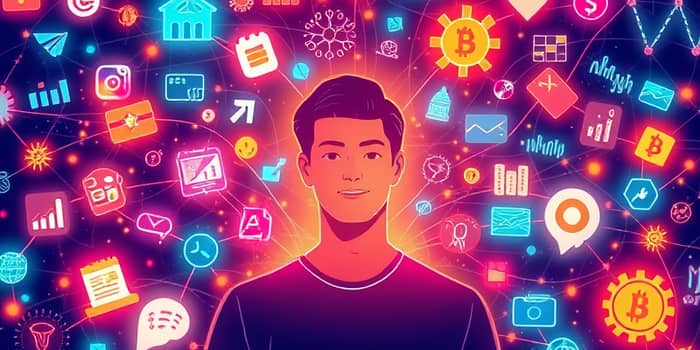
In a world where financial products have become largely commoditized, standing out as a bank or financial institution demands an entirely new approach. Hyper-personalization offers a bold solution—moving beyond basic segmentation to tailor every interaction and recommendation around each customer’s unique needs, behaviors, and aspirations. By leveraging cutting-edge technology and deep contextual insights, institutions can create advanced real-time personalization techniques that transform routine banking into a truly customer-of-one experience.
Imagine a client who no longer receives generic emails but instead feels seen and valued at every turn. When every message resonates with personal intent, customers develop a profound sense of trust, and banks evolve from mere service providers to dedicated partners on a shared financial journey.
Traditional personalization often meant little more than addressing a customer by name in an email or suggesting a generic credit card offer. In contrast, hyper-personalization employs micro-segments predicting customer needs to deliver timely and relevant solutions that reflect each individual’s life stage and aspirations.
It continuously adapts based on transaction history, spending patterns, real-time location data, and sentiment analysis, ensuring that every recommendation feels tailor-made. Institutions can detect when a young professional is exploring home listings and proactively offer mortgage guidance, or when a retiree reviews travel sites and propose a low-risk investment plan to fund their trip.
Consider Jane, who receives a personalized saving plan moments after her salary deposit using payroll data. She is guided through a custom roadmap that aligns with her goal of buying her first home—an experience that deeply resonates and cements her loyalty.
Implementing hyper-personalization requires a robust technological foundation. At its core, this system relies on AI-driven analytics, real-time data processing, and behavioral science insights to craft individualized experiences.
Underneath these layers lies event streaming and big data platforms that ingest every click, transaction, and customer sentiment in real time. By applying AI-driven emotional intelligence insights, banks can detect moments of frustration or opportunity and deliver the right nudge—whether it’s a budgeting tip after overspending or a tailored offer when financial confidence is high.
The advantages of hyper-personalization extend across engagement, revenue, operational efficiency, and risk management. By anticipating needs and making relevant suggestions, banks can forge deeper emotional connections and foster long-term loyalty. According to industry research, institutions that support financial wellbeing see engagement rates soar from 20% to 73%.
On the business side, real-time offers and tailored product bundles drive market-leading revenue growth and higher conversion rates. Automated insights free advisors from manual tasks, allowing them to focus on strategic client relationships. Moreover, AI-powered fraud detection and credit assessments enhance security, delivering seamless and secure experiences for even the most complex financial products.
Clients who feel understood share their experiences, amplifying word-of-mouth advocacy and strengthening a bank’s brand reputation. Over time, this trust translates into measurable ROI—lower churn rates, higher lifetime value, and a distinct competitive edge.
Financial institutions across the globe have begun harnessing hyper-personalization to redefine customer experiences. Below are some inspiring examples:
Ma French Bank, leveraging real-time analytics from Personetics, achieved a 68% year-over-year engagement uplift by delivering dynamic product offers precisely when customers needed them. Analogous to how Spotify curates playlists or Amazon recommends products, these platforms monitor life events—payroll changes, celebrations, or travel plans—and respond with hyper-relevant advice and solutions.
Transitioning to hyper-personalized services is not without obstacles. Building a unified data infrastructure that consolidates siloed information into a coherent customer profile is a major undertaking. Organizations must establish strong governance and privacy frameworks to earn and maintain trust.
Scalability is another concern. Delivering individualized experiences at scale requires sophisticated orchestration of AI models, real-time analytics, and personalization engines. Institutions must train teams and adapt processes to support a culture of experimentation and continuous improvement, balancing cost against expected ROI.
Ethical considerations loom large. Firms need transparent AI models, explicit consent management, and rigorous compliance with regulations to avoid breaches of trust. By demonstrating responsible data use and clear value exchange, banks can nurture lasting customer confidence.
The horizon of hyper-personalization promises even richer, more emotionally attuned experiences. Innovations in behavioral science and sentiment analysis will enable banks to deliver emotional intelligence nudges driving engagement at precisely the right moment.
Emerging voice banking assistants will adapt tone and suggestions based on real-time sentiment, while wearables and IoT devices can trigger personalized budgeting tips when spending impulses arise. These innovations will knit together a tapestry of seamless omnichannel customer experiences that follow individuals across every facet of their digital lives.
The promise of hyper-personalization lies in transforming one-size-fits-all banking into an intimate partnership. Every interaction becomes an opportunity to delight and empower customers by anticipating needs, offering timely solutions, and guiding them toward their goals.
By weaving together advanced analytics, AI-powered insights, and a deep appreciation for individual context, financial institutions can craft truly bespoke journeys tailored to each customer. Start by piloting a single use case, measure outcomes, and iterate rapidly—this pragmatic approach will unlock the true potential of hyper-personalization and set your organization on a path to lasting loyalty and growth.
References