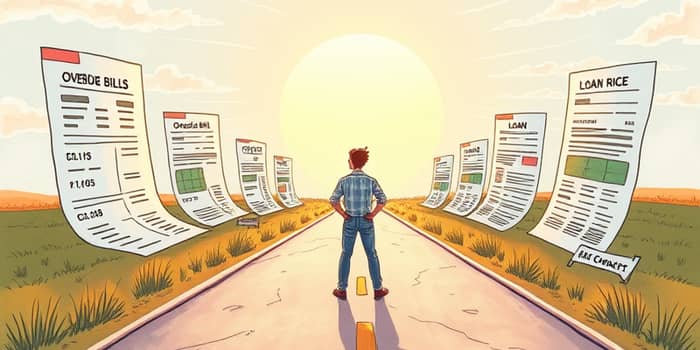
In today’s shifting economic landscape, many borrowers find themselves struggling to stay current on personal loan payments. Whether triggered by unexpected medical bills, job loss, or rising living costs, falling behind can feel isolating and overwhelming. Yet, understanding the journey from missed payment to default is the first step in reclaiming control and avoiding long-term damage.
In this comprehensive guide, we offer a compassionate, step-by-step roadmap. You’ll learn key timelines, borrower options, legal considerations, and strategies to rebuild your financial foundation. With insightful guidance and practical tips, you can transform uncertainty into actionable progress.
As we move through 2026, economic pressures—elevated inflation at 2.45% and a slight rise in unemployment to 4.5%—have pushed more consumers into the nonprime lending market. Lenders have loosened standards to capture demand, but this has led to increased delinquencies across credit products. When a personal loan payment goes unpaid, the journey to default begins, affecting credit scores and future borrowing power.
Lenders brace for further deterioration in credit quality through 2027, making it crucial for borrowers to act quickly when payments are missed.
When you miss a payment, you enter the pre-default phase. During this time, lenders typically send reminders and warning notices, outlining potential consequences if the debt remains unpaid.
At the 30-day mark, your account may be escalated internally. Delinquency is reported to credit bureaus, and access to additional credit can be shut off.
By 180 days past due, most lenders will write off the debt and transfer it to a third-party collection agency. In some cases, creditors may sell unresolved debt even sooner.
Once in the collection agency phase, demand letters arrive, and you’ll receive persistent phone calls. If cooperation stalls, agencies prepare for legal action, seeking a default judgment that could lead to wage garnishment or asset seizure.
Even as the default process unfolds, you have powerful tools to mitigate harm and regain stability. Acting proactively can prevent escalation and preserve your credit profile.
Beyond these immediate steps, consider out-of-court resolutions. Many lenders prefer negotiated settlements over time-consuming legal battles, and you may secure relief through:
If out-of-court remedies fail, understanding the legal landscape becomes critical. Most states impose a 3- to 6-year statute of limitations on personal loan suits, after which lenders lose the right to sue.
Any workout or settlement must be documented in writing, with clear clauses to protect all parties. In jurisdictions using notices akin to Section 13(2), lenders must give you 60 days to repay the full amount or object before pursuing court action.
Should the case proceed to court, evidence is exchanged and hearings held. A ruling in favor of the lender can lead to a Recovery Certificate, authorizing asset attachment.
Knowing these thresholds helps you assess negotiation leverage and anticipate lender strategies.
Surviving a loan default isn’t just about recovery—it’s about emerging stronger. Implement proactive risk management by monitoring your credit report monthly and setting up payment reminders.
Work with a certified credit counselor to design a budget that allocates emergency savings and prevents future shortfalls. Even small contributions to a rain-y day fund can shield you from unexpected expenses.
Rebuilding your score starts with making consistent, on-time payments on any remaining accounts. If possible, consider secured credit cards or small installment loans to demonstrate responsible behavior.
Defaulting on a personal loan can feel like a financial nightmare, but it doesn’t have to define your future. By equipping yourself with knowledge, taking swift action, and leveraging available remedies, you can mitigate damage and chart a path to renewed stability.
Remember, every step you take—no matter how small—brings you closer to regaining control. With resilience and informed decisions, you can navigate the choppy waters of default and steer toward a brighter financial horizon.
References