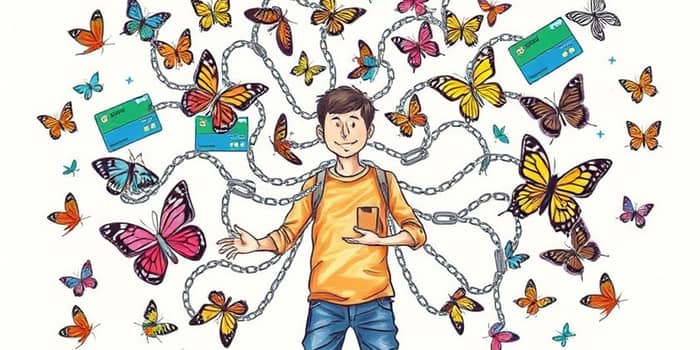
In Q4 2025, U.S. credit card balances soared to a record $1.277 trillion, marking a pivotal moment in personal finance history. This staggering figure eclipses the pre-pandemic high by 38% and highlights the pervasive grip of plastic money. As consumers swipe with ease, unseen forces in our brains and our economy are quietly steering us toward prolonged debt and emotional turmoil.
Since 1999, credit card debt has climbed relentlessly, rising by 66% from Q1 2021 to Q4 2025. Projections suggest balances will reach $1.18 trillion by the end of 2026, with delinquencies hovering at a steady 2.57%. Over 800 million cards circulate nationwide, and in 2024 cardholders paid $160 billion in interest at an average rate of 23%.
Regional disparities deepen the concern. In Q3 2025, Connecticut led the nation with an average balance of $9,778, while Mississippi trailed at $4,887. Washington state posted the fastest growth (11.8%), and New Mexico saw the steepest decline (10.3%).
Amid this surge, 61% of indebted cardholders have carried balances for at least one year, an increase from 53% in late 2024. Yet fewer than half of adults carried a balance even one month in the past year, suggesting a split between disciplined spenders and chronic debtors.
Credit cards bypass our innate fear of loss, turning purchases into a near-painless experience. Normally, paying cash activates the insular cortex, the brain’s physical pain center, creating a tangible sense of sacrifice. Cards, however, steal that sensation, replacing it with immediate rewards.
Research shows that card usage triggers sensitizing the striatum, dopaminergic center, similar to responses seen with addictive substances. Gamified rewards, points, and miles exploit our reward circuits, fostering the anticipation of pleasure fostering spending habits and eroding rational decision-making.
As balances swell, emotional distress follows. Debt often triggers a cascade of anxiety, guilt, shame, depression, and chronic stress. One borrower described sleepless nights worrying over creditor calls, while another felt paralyzed by the gap between income and interest charges.
Studies link prolonged financial stress to elevated blood pressure, weakened immunity, and persistent headaches. The burden of high-interest payments intensifies fear and isolation, straining relationships and self-worth.
Businesses design cards to feel painless. By detaching payment from purchase, cards circumvent the pain of tangible cash payments, encouraging buyers to overspend by as much as 12% compared to cash transactions. Marketers stoke FOMO and emotional triggers, while profit-driven systems downplay the looming debt.
With $160 billion in annual interest, lenders profit handsomely from this cycle. Yet cardholders often underestimate long-term costs, focusing on short-term gains tied to flashy rewards and sign-up bonuses.
Escaping the credit trap requires both practical steps and a mindset shift. Below are actionable methods to curb spending, reduce balances, and reclaim financial peace:
Additionally, mindfulness practices, such as pausing before each transaction or visualizing long-term goals, can counter impulsivity and restore rational control.
Economists predict moderate growth in total balances through 2026, but any surge in delinquencies could signal systemic strain. Rising inflation and interest rates may exacerbate the debt burden for vulnerable populations.
Cards themselves are neutral tools. However, unchecked spending habits and opaque reward systems transform them into instruments of long-term financial pain. Consumers who understand the underlying mechanisms can shift from being passive participants to empowered decision-makers.
The record $1.277 trillion in credit card debt is more than a statistic—it’s a reflection of human behavior, economic pressures, and psychological vulnerabilities. By acknowledging the forces at play and adopting practical strategies, individuals can dismantle the grip of revolving debt.
Financial freedom begins with small, consistent choices: swapping plastic for cash, automating payments, or seeking trusted advice. Each step builds resilience against the siren song of easy credit, transforming chains of debt into pathways toward stability and peace of mind.
References