The global call for sustainable agriculture has never been louder. As we face mounting environmental challenges, food security concerns, and shifting consumer preferences, a new era of farming emerges—one that balances profitability with ecological stewardship. In this article, we explore how the sustainable agriculture market is evolving, driven by innovation, policy support, and a shared commitment to responsible growth.
By understanding key trends, technologies, and practical strategies, stakeholders can cultivate sustainable and profitable agricultural ventures that stand the test of time. We delve into market projections, primary drivers, leading practices, and the opportunities that lie ahead.
The sustainable agriculture market has shown remarkable momentum in recent years. Valued at US$ 17.9 billion in 2025, it is projected to reach US$ 37.6 billion by 2032, expanding at a CAGR of 11.2% between 2026 and 2032. Alternative estimates place its 2024 valuation at US$ 16.1 billion, with a projection of US$ 33.9 billion by 2031 at the same growth rate.
Europe leads the current market share, buoyed by stringent regulations and established organic sectors, while the Asia-Pacific region—particularly India and Southeast Asia—emerges as the fastest-growing market, characterized by rapidly growing Asia-Pacific markets and dynamic policy initiatives.
Three powerful forces propel the sustainable agriculture revolution:
Climate resilience has also become a non-negotiable element. Practices that mitigate risk from extreme weather events and enhance soil health are paramount. Across OECD countries, agricultural production has increased fivefold since 1990, while greenhouse gas emissions have only grown by a fraction—highlighting the impact of improved nutrient efficiency and precision farming.
Organic farming remains the cornerstone of sustainable agriculture. With advances in biofertilizers and biopesticides, yields are rising and profitability is within reach for more farmers than ever before. The fruits and vegetables segment, in particular, drives growth due to high perishability and stringent safety standards.
Regenerative agriculture, including no-till farming, cover cropping, and rotational grazing, goes a step further by actively restoring soil health and sequestering carbon. Farmers engaging in these methods can access carbon credit markets, turning ecological stewardship into a new revenue stream.
A new wave of innovation is emerging at the intersection of biology and digital technology. Key areas include:
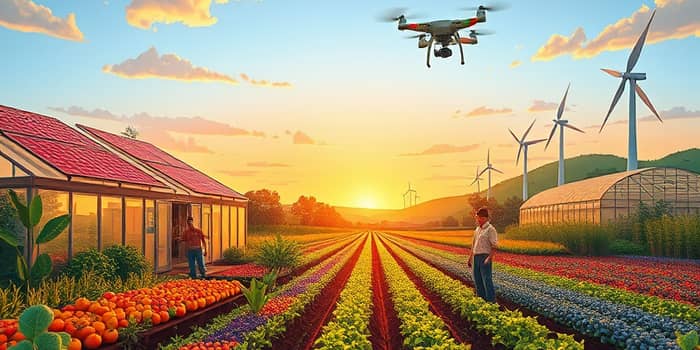
These developments illustrate blending digital innovation with natural wisdom, enabling farmers to maximize yields while minimizing environmental impact. AgTech firms and traditional agrochemical companies are forging strategic alliances to offer holistic solutions, driving adoption even in regions with limited infrastructure.
Despite robust growth drivers, several obstacles hinder widespread adoption:
To address these challenges, stakeholders can pursue practical steps to drive positive change:
Looking ahead, two transformational opportunities stand out. First, regenerative and carbon farming unlock new revenue streams through carbon credits and align with global net-zero ambitions. Second, the fusion of digital tools with biological inputs offers a systems-based approach to farm management, especially impactful in regions with growing mobile connectivity.
The path to a secure and responsible harvest demands collective effort. Farmers, investors, policymakers, and consumers each have a role to play. By championing heightened environmental stewardship and innovation, we can foster a resilient agricultural system that feeds a growing population while safeguarding the planet.
Whether you are a producer seeking to integrate climate-smart techniques, an investor evaluating long-term opportunities, or a policymaker designing supportive frameworks, the time to act is now. Embrace thriving regional ecosystems with local collaboration and contribute to a future where agriculture returns bountiful yields without compromising Earth’s health.
In harnessing the power of sustainable agriculture, we ensure that every harvest is not only abundant but also responsible. The secure harvest we build today will nourish generations to come.
References