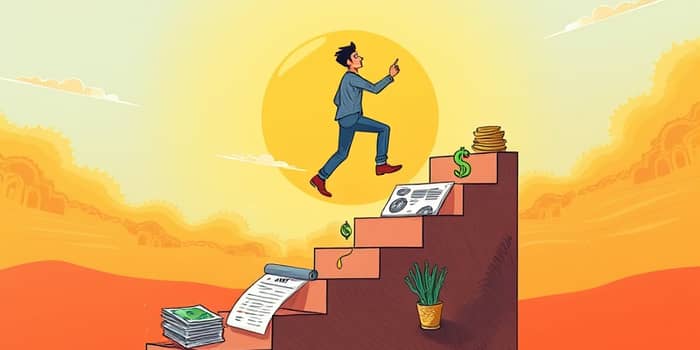
Every personal loan is more than a financial transaction—it’s a chapter in your unique journey toward achievement. In February 2026, borrowers are finding more favorable rates than last year, with average APRs dipping below historical highs. By understanding current trends and applying proven strategies, you can transform your borrowing experience into a powerful tool for growth.
As of February 2026, the average APR for a three-year personal loan stands at 13.44%, down from 15.29% a year ago. Five-year loan rates have also decreased, now averaging 18.11% APR compared to 19.93% last year. Market ranges vary widely—from as low as 6.49% to nearly 36%—depending on credit profile and lender.
Landing single-digit APRs is a big win for well-qualified applicants. Autopay discounts of 0.25% to 0.50% can further lower costs. Recognizing when to lock in a rate and choosing the right term are critical first steps toward a successful repayment journey.
Your credit score is the cornerstone of your loan story. Higher FICO scores translate to lower APRs, giving you more breathing room for repayment and financial planning. Subtle improvements in credit behavior—like reducing your debt-to-income ratio—can yield immediate savings.
Bank-specific ranges also matter. Institutions like Wells Fargo and American Express offer APRs starting near 7% with autopay benefits, while other lenders span up to 26% APR. Comparing offers empowers smarter decisions when multiple options are on the table.
When you hold multiple debts—credit cards, student loans, auto financing—selecting the right payoff strategy shapes both timeline and interest savings. Two popular methods are the debt avalanche and the debt snowball.
Both methods lead to full repayment. Your personality and financial profile determine which path suits you best.
Once you’ve chosen a strategy, implementing additional tactics can dramatically shorten your loan term and reduce overall interest. Six proven methods include:
Consistency is key. Building repayment habits transforms loan management from a chore into an empowering routine that steadily moves you toward freedom.
Effective repayment thrives on organization. Crafting a simple budget that allocates funds specifically for loan obligations lets you track progress and avoid surprises. Automating payments through autopay eliminates missed deadlines and may qualify you for rate discounts.
Maintaining an up-to-date repayment plan fosters confidence and reduces financial stress.
Understanding broader market data can fuel your motivation. Today, 23.5 million Americans hold unsecured personal loans, carrying an average debt of $11,773—up 6% year-over-year. Delinquency rates hover around 3.9%, underscoring the importance of disciplined repayment.
Monitoring your own metrics—remaining balance, interest accrued, time to payoff—turns abstract goals into concrete milestones. Celebrate each paid-off loan or downward balance adjustment to reinforce your momentum and keep your vision sharply in focus.
Your personal loan story is a narrative you write with every payment, every decision, and every incremental improvement in your credit profile. Start by comparing current rates, choose the strategy that aligns with your temperament, and layer in acceleration tactics to finish sooner.
With purposeful planning and steadfast execution, you’ll convert a standard borrowing experience into a powerful engine for financial growth. Embrace each step, track your achievements, and light the path toward a debt-free horizon—your success story is waiting to be written.
References